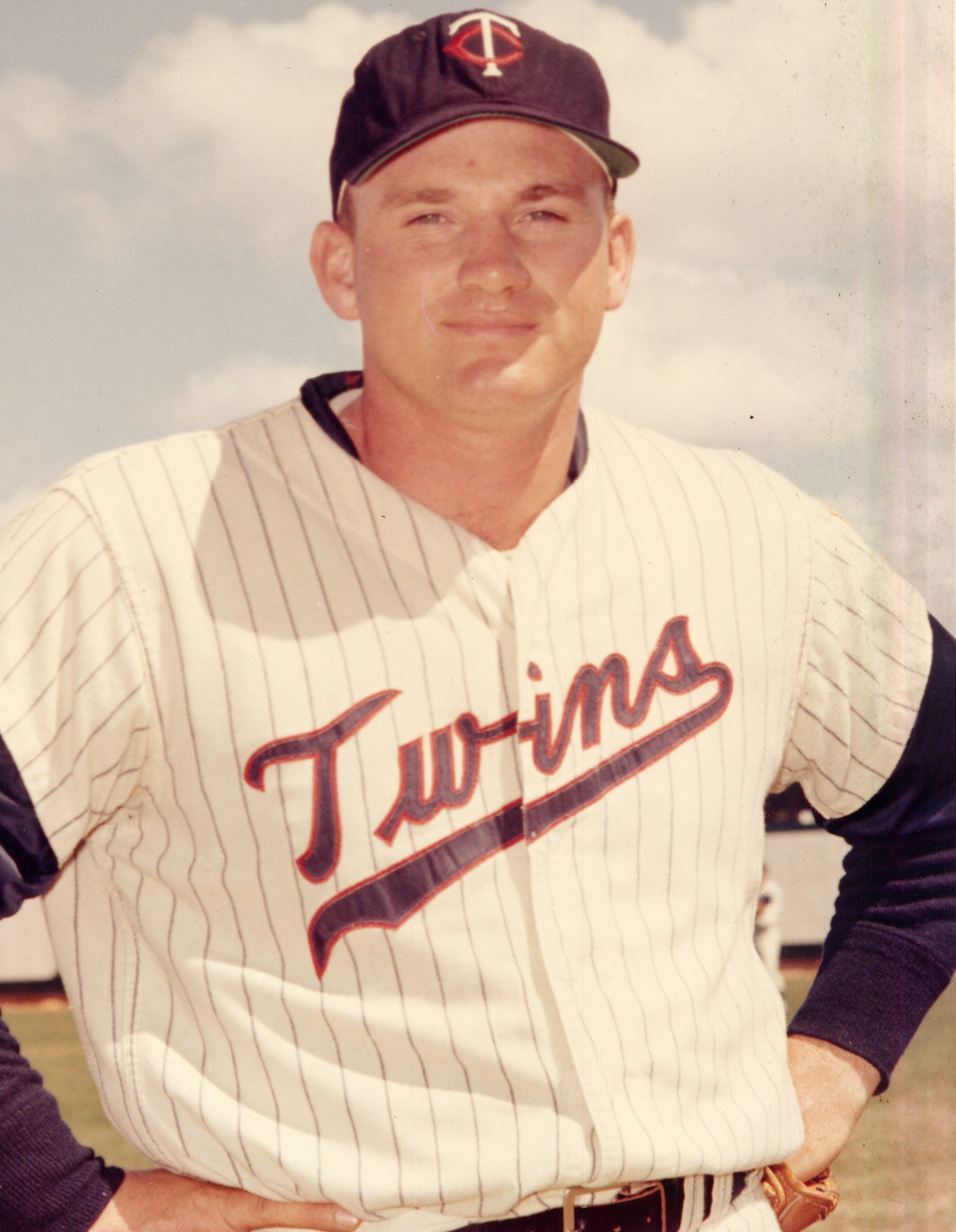
Birthday Recognition Planned for June 29
Killebrew announced in December that he had esophageal cancer. The
five-year survival rate is less than 25 percent. But Killebrew had been
predictably upbeat about his chances and in March even visited the Twins
in spring training.
Twins officials had hoped he could travel to Minneapolis to throw out
the first pitch for the home opener on April 8. Instead, Killebrew
remained in Arizona to continue treatment.
Those who wanted to see Killebrew and applaud him hoped for that
opportunity on June 29, his 75th birthday. He was scheduled
to be in town for his charity golf event and the Twins are home that day
against the Dodgers. Twins marketing executive
Patrick Klinger said in April the club
planned to recognize Killebrew on his birthday.
Killebrew won’t stand on the Target Field grass on June 29 and receive
a long standing ovation from the fans, but we can cheer for this
remarkable man right now who has meant so much to the region and fans
across America. Whether through smiles or tears, his admirers should
view his life not with sadness but celebration.
Killebrew came here with the Twins at age 24 after the franchise
relocated from Washington, D.C. following the 1960 season. The
Washington Senators had signed him to a $50,000 bonus contract at 17
years old. He grew up in Idaho as a legendary high school athlete who
could have played quarterback in college football.
Baseball rules back then required players who received bonus contracts
to play their first two seasons with the major league team. During his
first five years in the major leagues Killebrew played in a total of
only 113 games, but in 1959 he had a breakthrough season hitting 42
home runs and driving in 105 runs for the Senators.
He hit over 40 home runs eight times during his major league career
that ended in 1974. His 573 career home runs ranked 11th on
baseball’s all-time list entering this season and he was third among
American League players, trailing only Babe Ruth
and Alex Rodriguez.
The “Killer” was known not only for his many home runs but the
distance he hit them. A stocky 5-11
slugger, he had extraordinary strength, and the tale is he inherited his muscle from a grandfather who reportedly was the strongest
man in the Union Army during the Civil War.